What Is a Digital Pipe Organ? A Plain-English Guide for UK Buyers
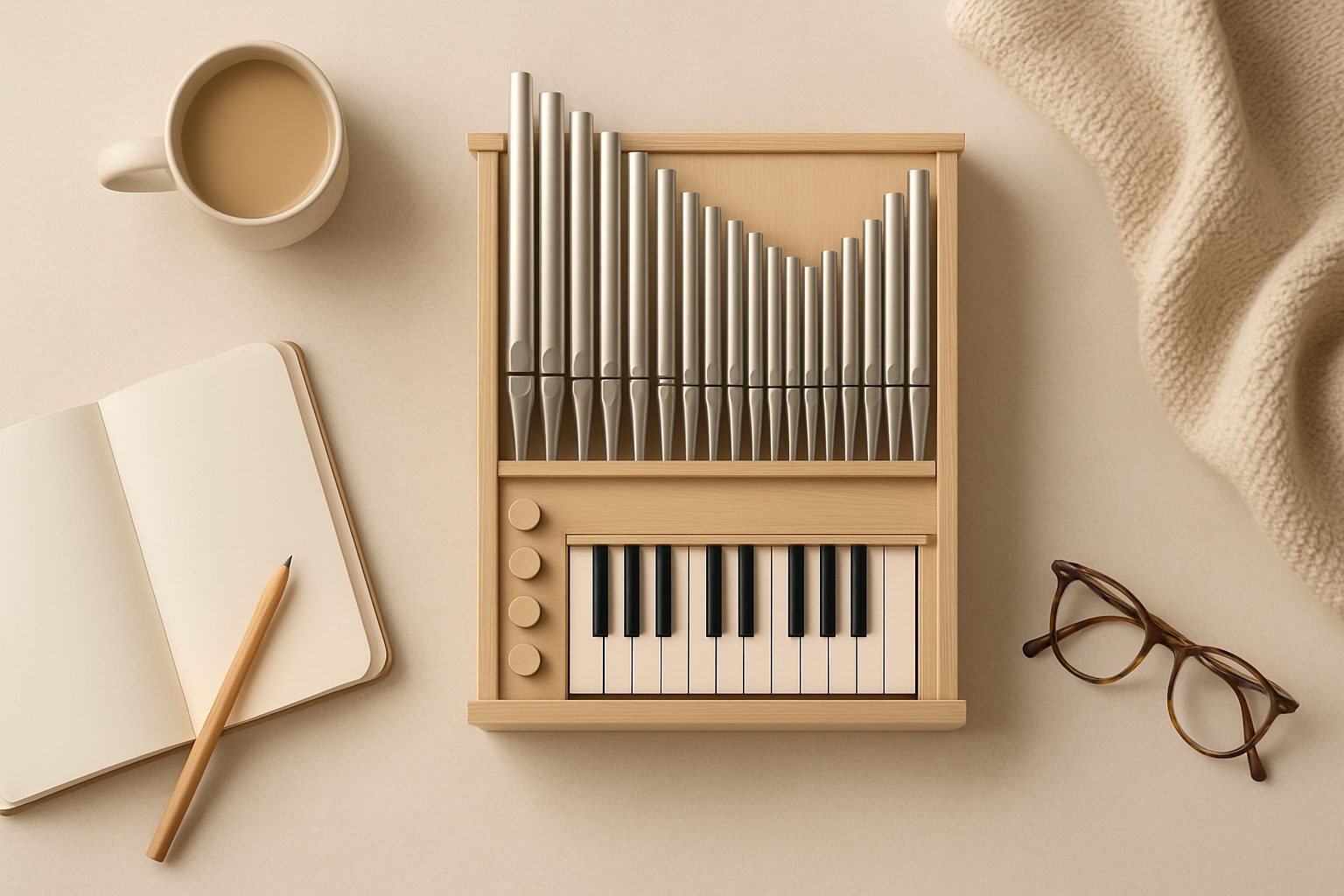
If you're curious about pipe organs but overwhelmed by the terminology, you're not alone. Church organs can look like vast machines with hundreds of pipes, and the language around them—stops, ranks, manuals, pedalboards—feels like a foreign language. A digital pipe organ is essentially a modern solution that captures the sound and playability of a traditional pipe organ using electronic technology. But understanding what that actually means requires breaking down some key components.
How a Digital Organ Works
A traditional pipe organ produces sound by forcing air through wooden or metal pipes of different lengths and diameters. Each pipe makes one note at one volume level. To create richer, more varied sounds, organs have multiple sets of pipes—sometimes dozens or hundreds.
A digital organ replaces those physical pipes with recordings or digital recreations of real pipe sounds. When you press a key, the organ plays a sample of an actual pipe being struck, or generates the sound mathematically. Modern digital organs use high-quality recordings from famous pipe organs across Europe, so the sounds are authentic rather than synthesised. The electronics then handle the mechanics: pressing a key triggers the correct sound instantly, and releasing it cuts off the note cleanly.
This approach has a real advantage for UK homes and churches with space constraints. A traditional three-manual pipe organ might require a dedicated room or a significant portion of a church. A digital equivalent can fit in a corner or on a stage.
What Are Stops and Ranks?
A stop is the control you pull or push to activate a particular set of sounds. On most organs, stops are arranged in rows near the keyboards, labelled with names like "Diapason," "Flute," "Oboe," or "Principal."
A rank is the actual set of pipes (or their digital equivalent) that the stop controls. Think of a rank as the physical thing; a stop as the switch that turns it on.
In a traditional pipe organ, a single manual might have 15 stops, each controlling a different rank of pipes. Some stops might be 8 feet (the standard pitch), while others are 16 feet (lower) or 4 feet (higher). These measurements refer to the length of the longest pipe in that rank—a relic from pipe organ design that stuck around even in the digital world.
In a digital organ, each stop you enable adds another layer of sound when you play. You might activate Diapason, Flute, and Principal together to create a full, bright sound, or use just Flute on its own for something softer and more delicate.
Understanding Manuals and the Pedalboard
A manual is simply a keyboard—a manual organ has multiple keyboards, usually between two and five, each with its own set of stops available. This lets you switch between different sound combinations without rewiring anything. For example, the Great manual might have warm, full stops, whilst the Swell manual has softer, more expressive ones.
Below the keyboards sits the pedalboard—a keyboard you play with your feet. On traditional pipe organs, pedalboards have up to 32 notes (from bottom C to top G), and organists use their feet to play bass lines and add depth. Learning to use a pedalboard takes real practice; it's not something you pick up by accident.
A beginner-level digital organ might have 25-note pedalboards, whilst larger ones have the full 32. Some budget models skip the pedalboard entirely or use smaller 20-note versions. If you're serious about organ playing, pedalboard size and responsiveness matter a lot.
How Digital Organs Replicate Pipe Sound
The best digital organs use samples recorded in real pipe organs—often from famous instruments in cathedrals across Europe. When you play a key, the organ retrieves the appropriate sample and plays it at the right pitch and volume. This captures not just the initial attack of the note (the sharp pluck or blow when the pipe starts), but also the sustain (the body of the sound as it continues) and the release (the tail-off when you let go).
Some digital organs go further and include physical modelling, which uses mathematical formulas to recreate how pipes produce sound. This approach can handle a wider range of playing styles and doesn't require enormous sample libraries.
The quality of the recordings matters tremendously. Organs sampled from quality instruments in reverberant spaces (like cathedrals) sound fuller and more lifelike than those sampled in dry studios. If you're considering a purchase, demos matter—hearing how the organ sounds in your own space beats reading a specification sheet.
Why Digital Organs Appeal to UK Buyers
Traditional pipe organs are expensive, bulky, and require specialist installation and maintenance. A digital organ offers several practical advantages: you can place it almost anywhere, it needs no tuning, and the initial cost is substantially lower. A reasonable beginner's digital organ might cost £3,000 to £8,000, whereas a equivalent traditional pipe organ would be five times that—if you could find the space.
For home use, churches that need portability, or musicians wanting to practise without a five-figure investment, digital organs make real sense.
The Honest Trade-offs
Digital organs can't perfectly replicate the physical experience of playing a pipe organ. You won't feel air movement through the floorboards, and the mechanical key action—the way keys respond as you press them—differs from vintage organs. Some players miss this tactile feedback.
You're also limited by samples and electronics. Very sensitive, expressive playing styles that exploit the quirks of a specific traditional organ can't be fully replicated on digital systems. And once a sample library is recorded, you're stuck with those particular sounds—you can't have the pipes retuned or reformatted like you could with a traditional organ.
For most learners and home players, though, these drawbacks are negligible compared to the cost and space benefits.
More options
- Digital Organ Keyboards & MIDI Manuals (Amazon UK) (Amazon UK)
- MIDI Organ Pedalboards (Amazon UK) (Amazon UK)
- Studio Headphones for Silent Organ Practice (Amazon UK) (Amazon UK)
- Organ Bench & Adjustable Keyboard Stools (Amazon UK) (Amazon UK)
- Hauptwerk & Organ Method Books (Amazon UK) (Amazon UK)